





More than a visual rebuild
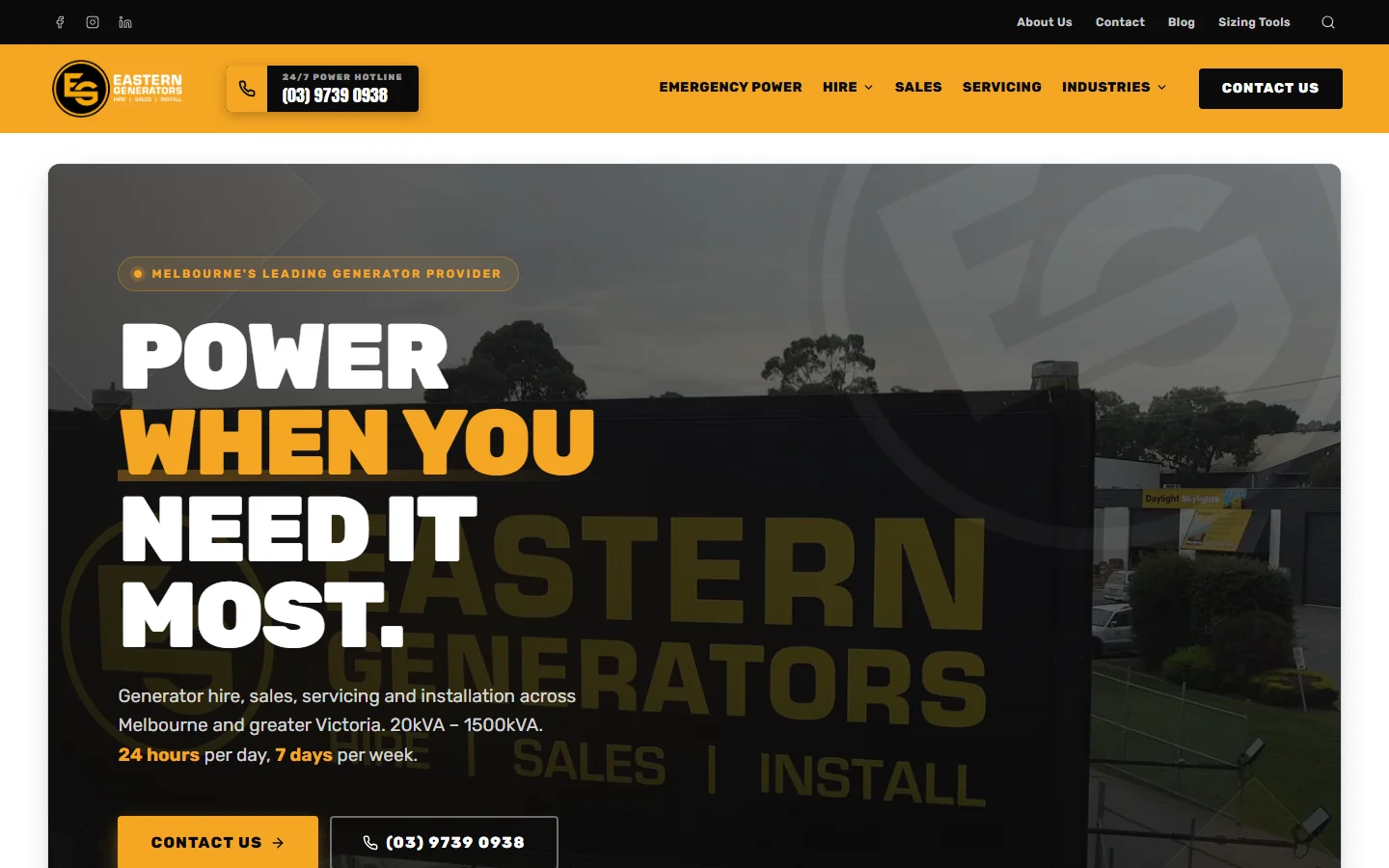
We’ve completed a brand-new website for Eastern Generators Hire, but the biggest change isn’t simply how it looks. This was a move away from an ageing WordPress and Divi setup towards a site designed to be fast, useful and much easier to keep improving.
The old build had more than 15 active plugins handling caching, forms, lead routing, phone tracking and other jobs around the site. We couldn’t push its mobile PageSpeed performance beyond the mid-70s in our testing, and even straightforward marketing changes had to work through a growing stack of dependencies.
The new public website is built with static Astro. It is hosted on our own VPS, can be run and reviewed locally, and gives us direct access to the templates, components and content whenever EGH needs another campaign, service page or article.
Built around the way customers arrive
EGH supplies generator hire, sales, servicing and installation across Melbourne and Victoria. Some visitors are planning months ahead. Others have lost power and need to speak to somebody now.
The new structure gives those customers clear routes into the business. Emergency power stays prominent, the core services are easy to scan, and the phone number and enquiry paths remain close at hand. Strong equipment photography and a sharper industrial design make the site feel like the business it represents.
A calculator that does real work
This build gave us room to go beyond a conventional brochure site. The integrated generator sizing calculator models running demand and motor start-up loads, plots the demand curve and recommends an appropriate generator size. A customer can then send the result to EGH for verification or request a PDF report.
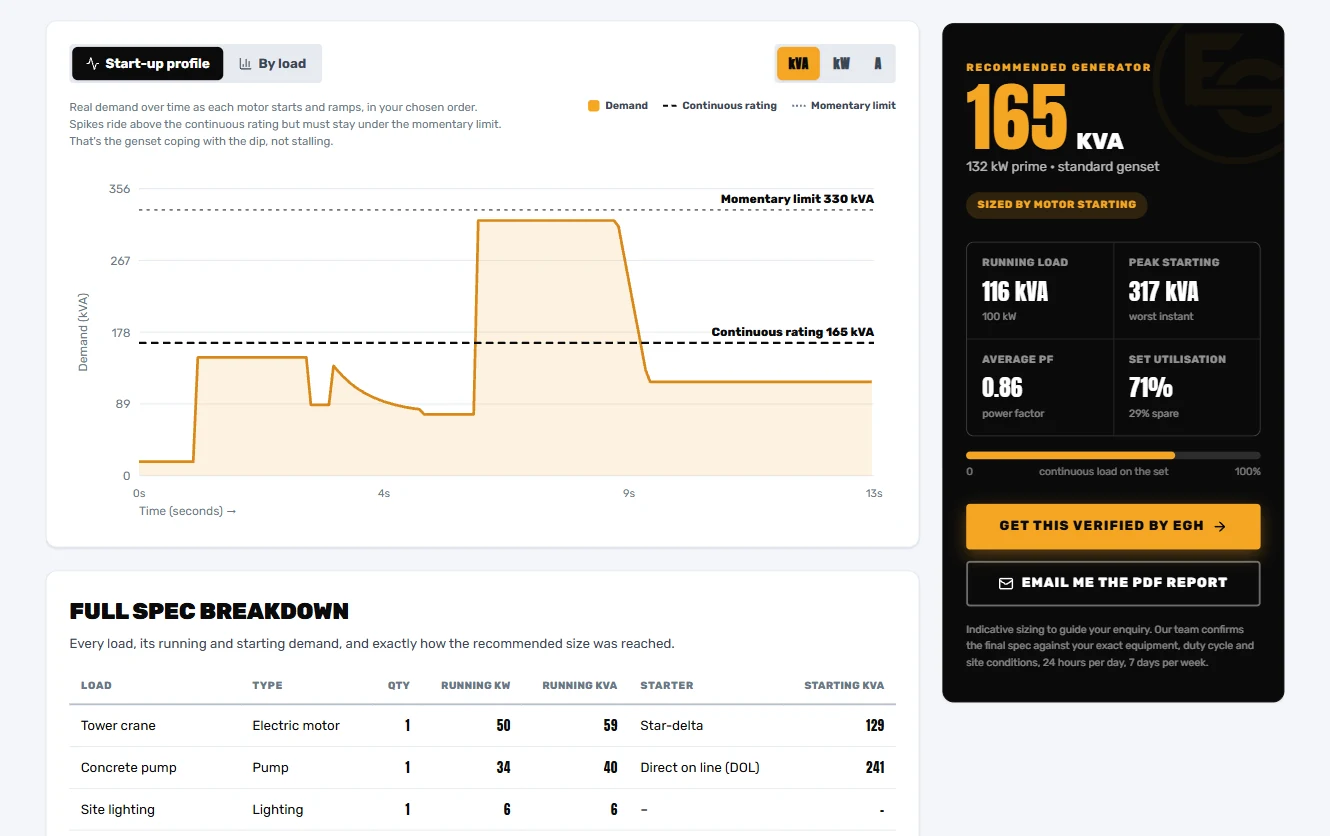
The tools section also includes fuel and runtime calculations and a hire cost estimator, giving visitors useful answers while creating a much better starting point for the sales conversation.
A selective CMS behind it
EGH didn’t need a giant content-management system controlling every part of the website. They needed focused controls for the operational work that matters.
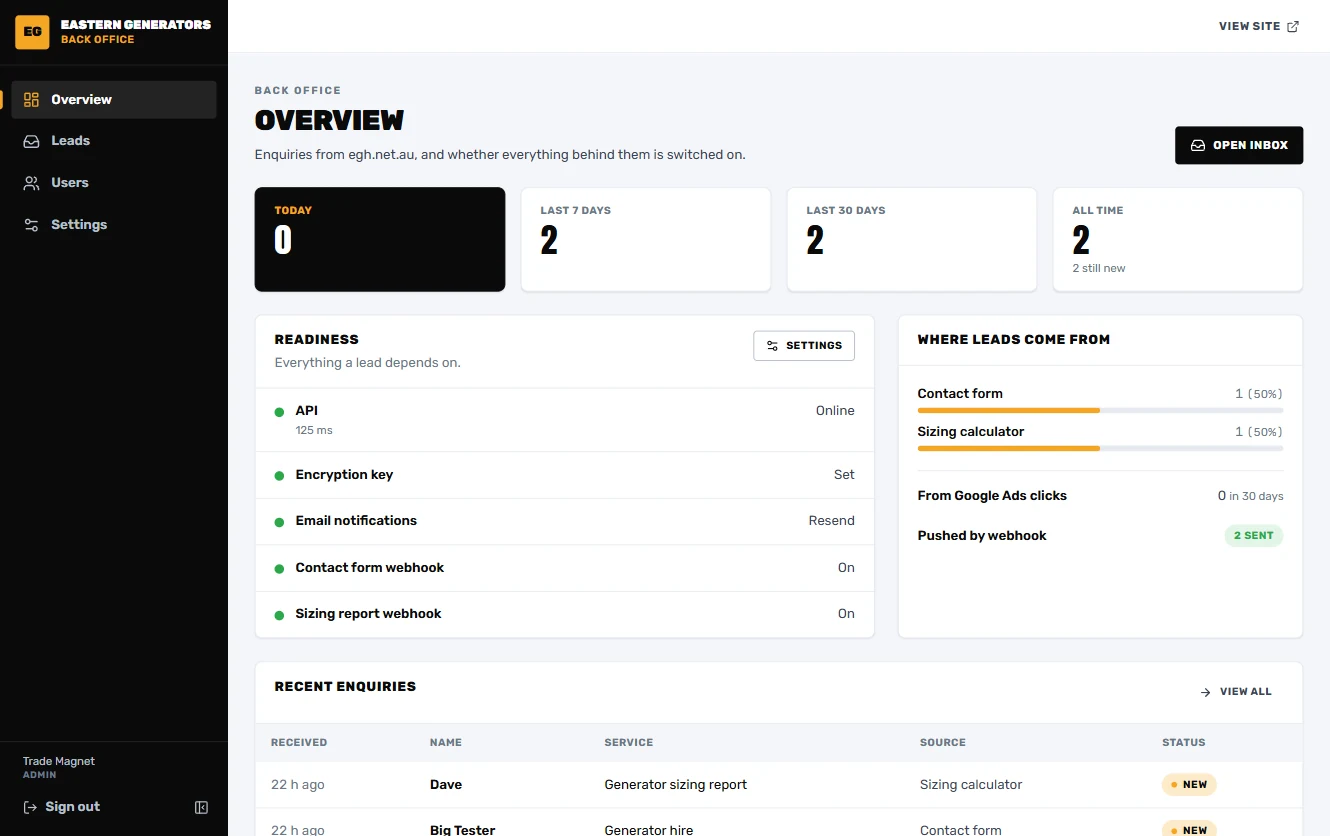
We built a small back office with React, Vite and Tailwind CSS. It provides a lead inbox, source reporting, integration readiness and settings for notifications and GoHighLevel. Enquiries from the contact form and sizing calculator arrive in one place and can be passed into the existing CRM workflow.
An AI-assisted improvement loop
The code-first setup changes how we can maintain the site. We can ask an agent to inspect PageSpeed Insights, follow a performance issue into the implementation, modify the relevant component and verify the result in the same working session.
We used that workflow to improve the homepage media. The hero can still use video, while a static image loads first so visitors aren’t left waiting for the opening visual. We also used AI-assisted tooling to inspect the image library, create descriptive filenames, convert assets and optimise them for the web.
In mobile PageSpeed Insights lab tests captured on 7 September 2026, the old staging site scored 65 for performance and the new live site scored 92. The new report also returned 97 for accessibility and 100 for both best practices and SEO. These were individual lab runs on different hosted versions, so they are a useful snapshot rather than a promise of identical results on every visit.
Ready for the next campaign
For EGH, the lasting benefit is a website that can keep moving with the marketing. We can create targeted landing pages, publish useful content, improve the calculators and respond to performance or search data without negotiating a page builder and a long plugin chain first.
Direct access to the code also keeps the build portable. It can be developed locally, deployed to EGH’s hosting and handed to another capable developer if the client ever needs that. The trade-off is that we own the deployment, backups and technical maintenance, which is why the small CMS is deliberately focused on the controls the client actually uses.
The bigger idea behind the build
This project is also our practical example of where service websites are heading: fast static front ends, selective CMS access, useful custom tools and an agentic workflow that connects research, diagnosis and implementation.
Read the full article: Why agentic websites change the game for ongoing marketing →
If your business needs a site built to keep evolving, explore our web development service or get an estimate.