




Where it started
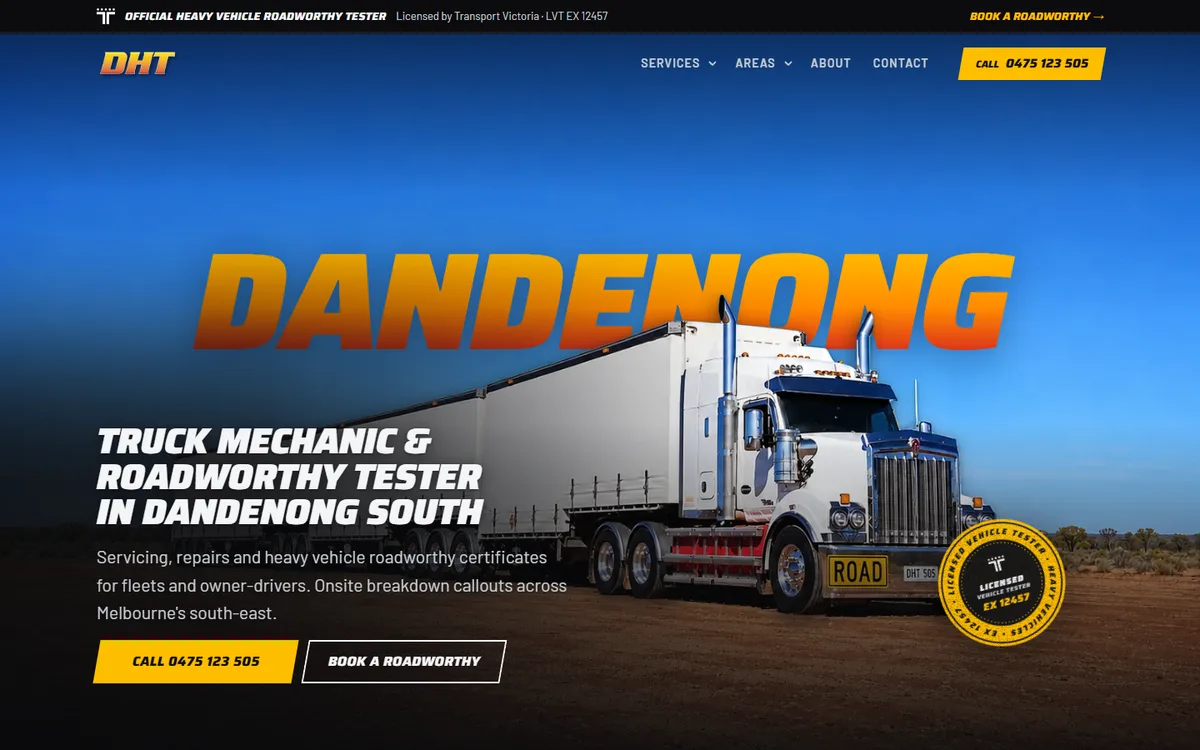
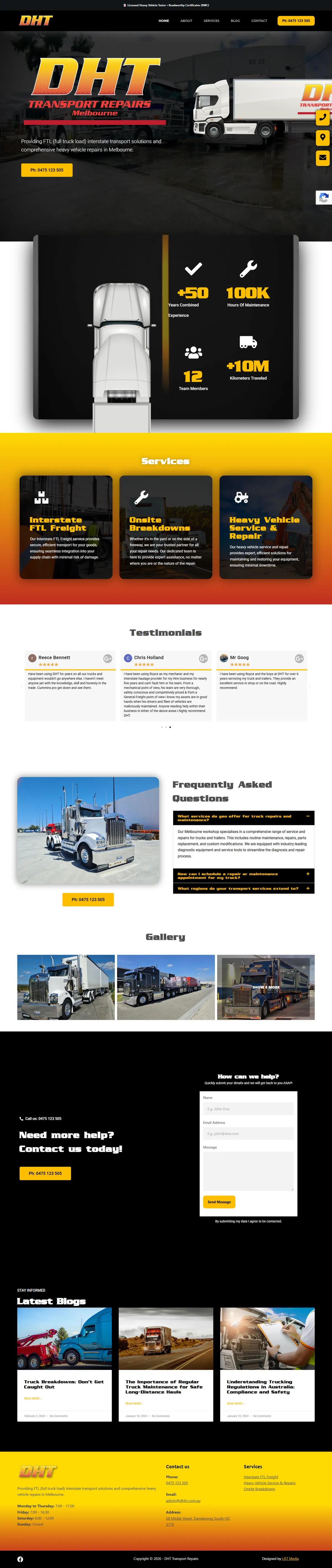
DHT Transport Repairs was our first ever client. In January 2024, back when we were LIST Media, we built them a WordPress site with Elementor and the Blocksy theme. It put a heavy vehicle workshop in Dandenong South online with its services, reviews, a gallery of the trucks and a phone number front and centre.
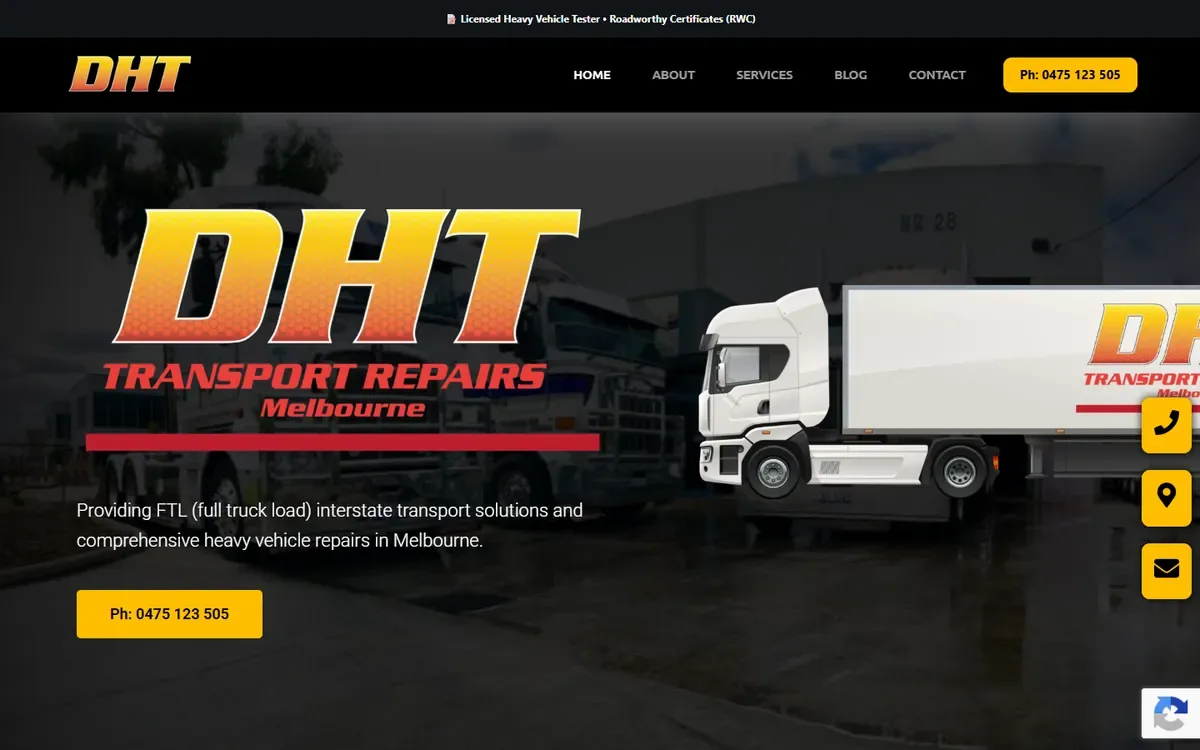
We were proud of it, and it did its job. But nearly three years on we know a lot more about what actually wins work for a local workshop, and this page is us being honest about the difference.
What changed in three years
The way people find a truck mechanic has moved on. Customers search by suburb and by the exact job, roadworthy in Dandenong, trailer repairs near Keysborough, mobile truck mechanic on EastLink. Google rewards the page that answers that one question well. And more of those questions now get answered by AI before anyone clicks a link.
 truck mechanic dandenong




Since the first site went up, ChatGPT, Claude, Gemini and Perplexity went from novelty to the first place a lot of people ask. Google now writes its own AI answer above the results. Those answers quote the sites that state the facts plainly: who you are, where, what you do, and proof you’re licensed to do it. A site that doesn’t say it clearly simply doesn’t get quoted.
A nine-page site built around a page builder wasn’t going to win that. It had one services page for everything, no suburb pages, and four plugins between the content and the visitor.
 WordPress + Blocksy theme
 Static Astro build: plain HTML + CSS
Why we rebuilt instead of patching
We looked at fixing the old site in place. Adding pages to a page builder site makes it heavier, every plugin is another thing to update and patch, and the structure Google needed (one page per job, one per suburb, the business details stated once and identically everywhere) was easier to build right than to bolt on.
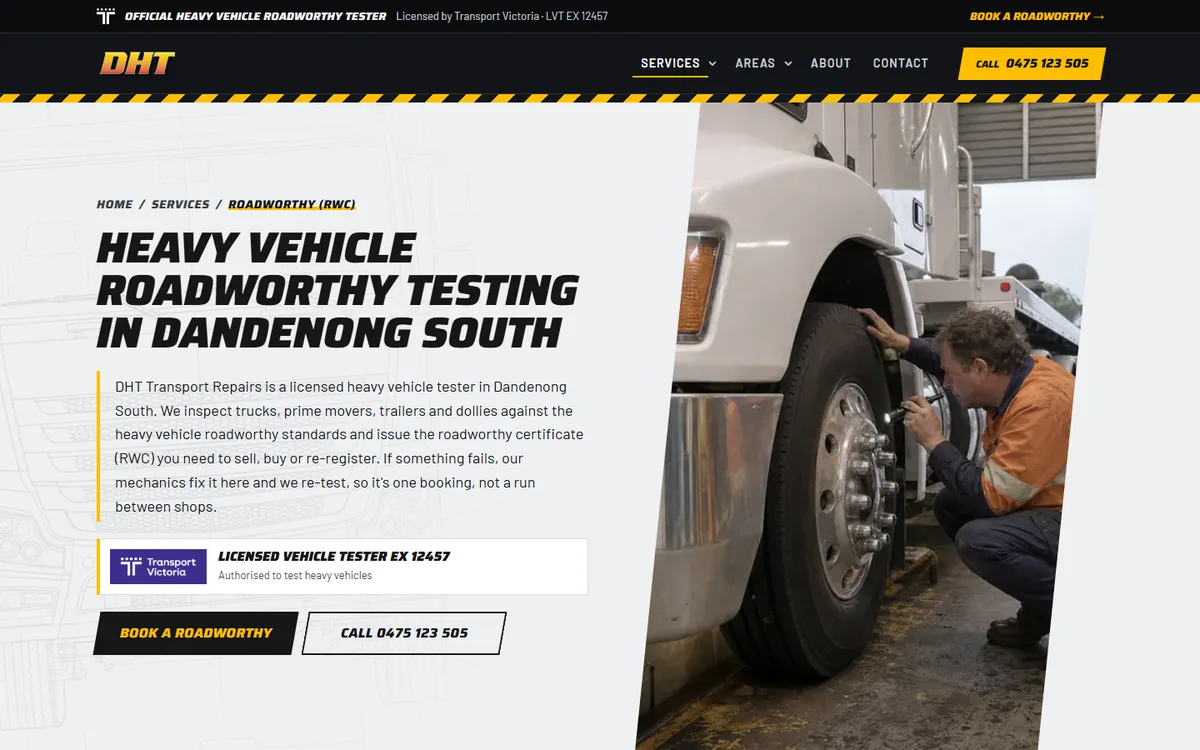
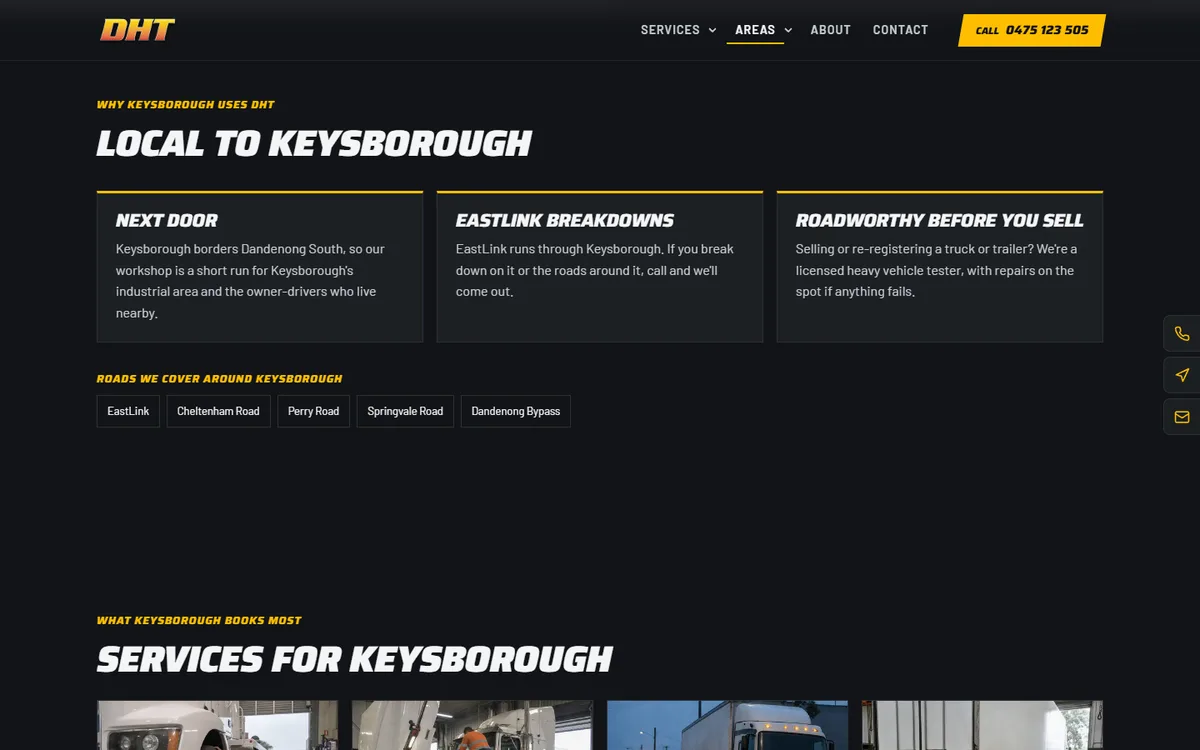
So we started again from a local search audit. It showed where DHT was missing from the results, and the gaps other workshops nearby leave open, roadworthy testing and breakdowns in Dandenong. The new page structure goes straight at those searches. The four biggest things we got wrong the first time are laid out, screenshot by screenshot, further down this page.
How the new site is built
The new site is a static Astro build with no page builder, no plugins and no JavaScript files on the homepage. On a phone the homepage drops from 86 requests and 1.5 MB to 23 requests and 743 KB, and there’s nothing left to update, patch or break.
It goes from 9 pages to 24. Every service gets its own page aimed at the way customers actually search: licensed heavy vehicle roadworthy certificates, repairs and servicing, onsite breakdowns, trailer repairs and interstate freight. The suburbs around the workshop get their own pages too.
Every old URL redirects to its new home, so nothing the old site already earned is lost. The forms run on a small API of our own, so every enquiry lands in the workshop’s inbox without a form plugin in sight.
Built AI-first
This is the difference we’re proudest of. The site isn’t just readable by AI search, it’s written for it:
- A plain answer at the top of every service page. Two or three factual sentences an AI answer can quote: who, where and what the service covers.
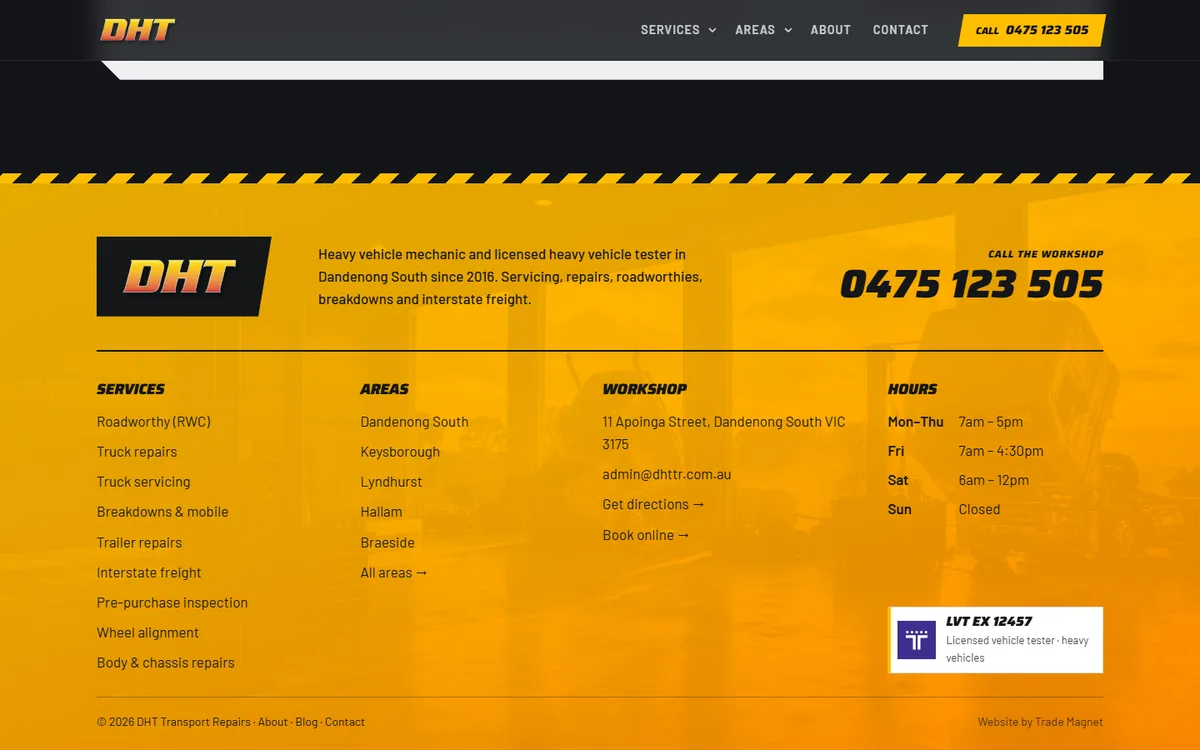
- The business, described once. Name, address, hours and phone live in one file, and every page, the structured data and the footer read from it, so the details can never disagree.
- Structured data on every page. Google and AI tools get the workshop as a local auto repair business, plus each service, its FAQs and the breadcrumbs.
- An
llms.txtfile. A plain-text summary of the business and every service, generated from the same data, for AI tools to read directly.
Built agentically
The whole site lives in a code repository we work on with AI agents like Claude. A new service page, a new suburb or a change to the hours is a quick, reviewed change, not an afternoon in a page builder. That’s what makes the suburb pages possible: each one gets real local detail written and checked, not a copy and paste.
Where it’s at
The new site isn’t live yet. It’s in final testing, and the old site is still the one on dhttr.com.au. The numbers on this page are measured on the finished build, so they won’t move much at launch.
Once it’s been live for a few months we’ll come back and add what really counts for DHT: where it ranks, and how many more calls and bookings come through.